
Ringworm outbreaks can be stressful for shelters, veterinary clinics and pet owners. Despite its name, ringworm isn’t caused by a worm at all but by a group of fungi that spread easily through spores. These spores can survive on surfaces and equipment for months if left untreated, making proper cleaning and disinfecting essential for controlling an outbreak. Ringworm is highly contagious, but with the right tools and techniques, outbreaks can be managed efficiently and safely.
Rescue® Disinfectants are gentle on surfaces, staff, and animals but powerful against pathogen. They are a trusted solution across veterinary clinics, shelters, and research facilities across the U.S.. Rescue brings a simple approach to managing ringworm contamination: “P.A.W.” (Protect & Prepare, Apply, Wait/Wipe/Wash).
P.A.W.: A Simple Method for Effective Ringworm Disinfection
When ringworm is identified or even suspected follow these three steps for successful environmental decontamination:
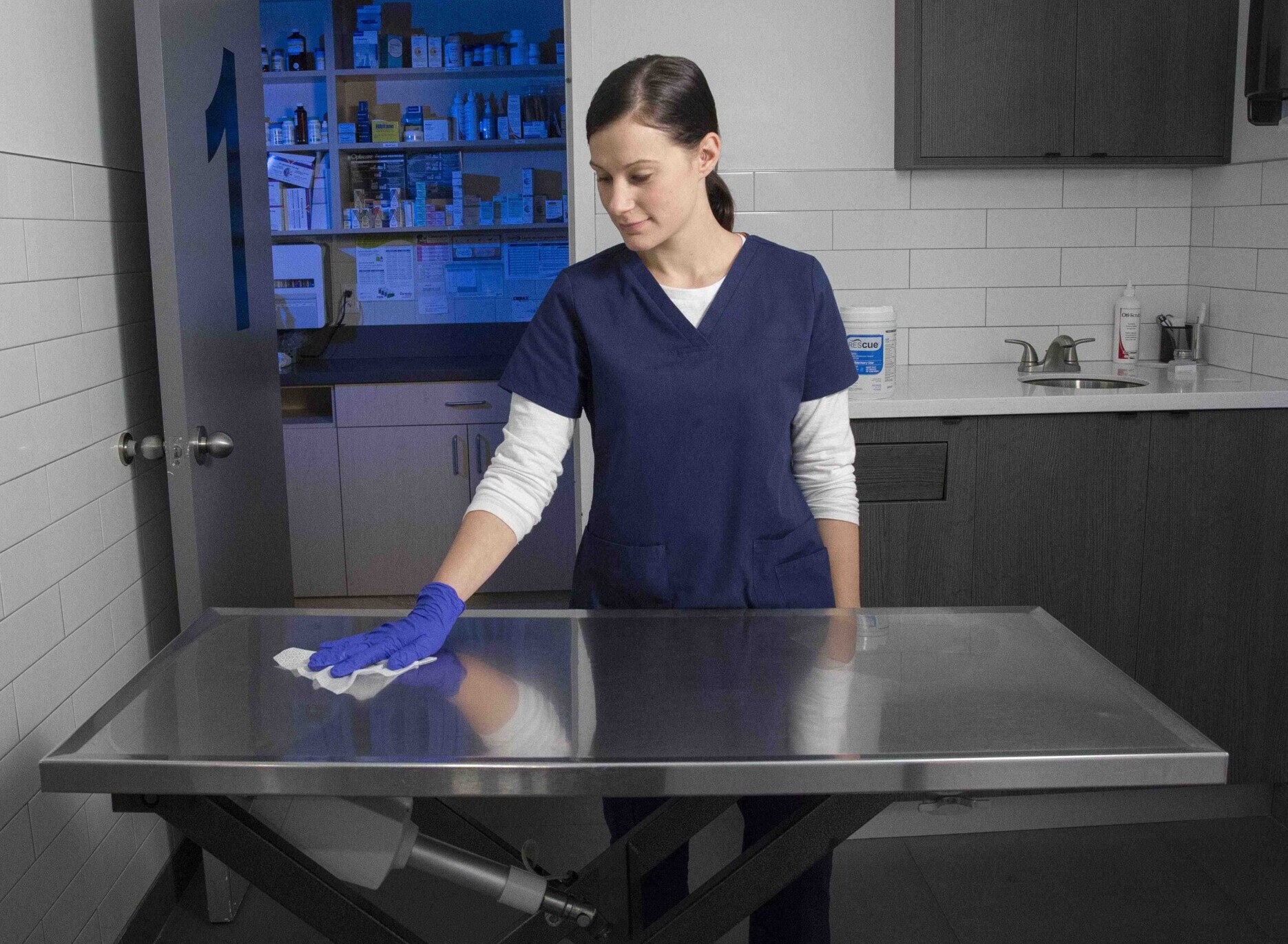
1. Protect & Prepare
- Protect: Ringworm spreads via microscopic spores that travel easily on clothing, tools, and hands. Before you start cleaning, make sure to wear protective clothing, including gloves and isolate infected or exposed animals.
- Prepare: Before you disinfect, remove visible soil and debris.
2. Apply
With the area prepared, it’s time to disinfect using Rescue Disinfectants, powered by Accelerated Hydrogen Peroxide® (AHP®).
- Spray, mop, or wipe Rescue directly onto the surface.
- If using Rescue Concentrate, dilute at 1:16 (8 oz of concentrate per 1 gallon of water)
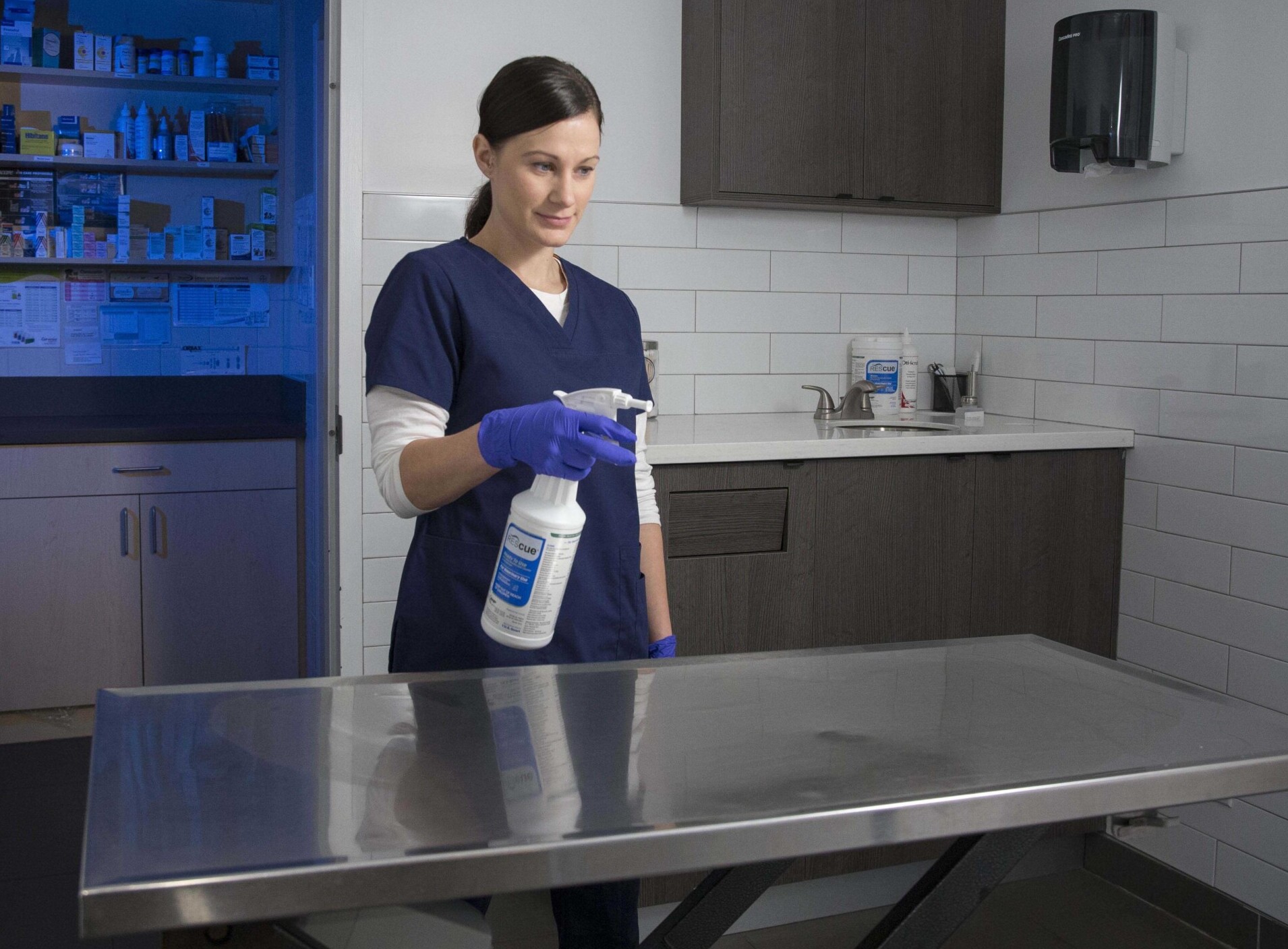

3. Wait, then Wipe/Wash
This final step is where disinfection truly happens.
- Wait for the Contact Time: Every disinfectant has a required contact time, or the length of time the surface must remain visibly wet to achieve disinfection. Allow Rescue to stay wet for the full duration listed on the product label.
- Wipe/Squeegee: Once the contact time is met use a clean, damp cloth to wipe down smaller areas or air dry or squeegee.
- Wash (If Required): In certain situations, if required, occasionally rinse with water.